
Condition Guide
Foot Pain
Foot pain can affect walking, balance, work, exercise, and everyday comfort. The source may be in the foot or ankle, or symptoms may be related to a nerve, the lower back, or another condition. A physician-led evaluation looks at the whole pathway rather than the painful spot alone.

The Painful Spot Is Not Always the Source
Burning, numbness, or aching in the foot may come from local tissue, from a nerve further up the leg, or from the lower back. Symptoms alone do not establish which.
Overview
What is foot pain?
Foot pain describes symptoms anywhere from the heel to the toes, including the ankle and the sole. Because the foot absorbs load with every step, small changes in activity, footwear, or mechanics can alter symptoms noticeably — which also makes the pattern useful diagnostic information.
Common Patterns
What this pain may feel like
- Pain with first steps
- Sharp or intense discomfort on standing after rest that may ease as you move.
- Burning or electrical sensations
- Symptoms that feel nerve-like rather than mechanical.
- Numbness or tingling
- Altered sensation in part of the foot or toes.
- Pain after prolonged standing
- Aching that builds through a shift or a long day.
- Pain with footwear or pressure
- Symptoms triggered by shoes, straps, or direct contact.
- Pain after a change in activity
- Symptoms following new training, new work demands, or a change in surface.
- Pain with back or leg symptoms
- Foot symptoms that occur alongside back, buttock, or leg complaints.
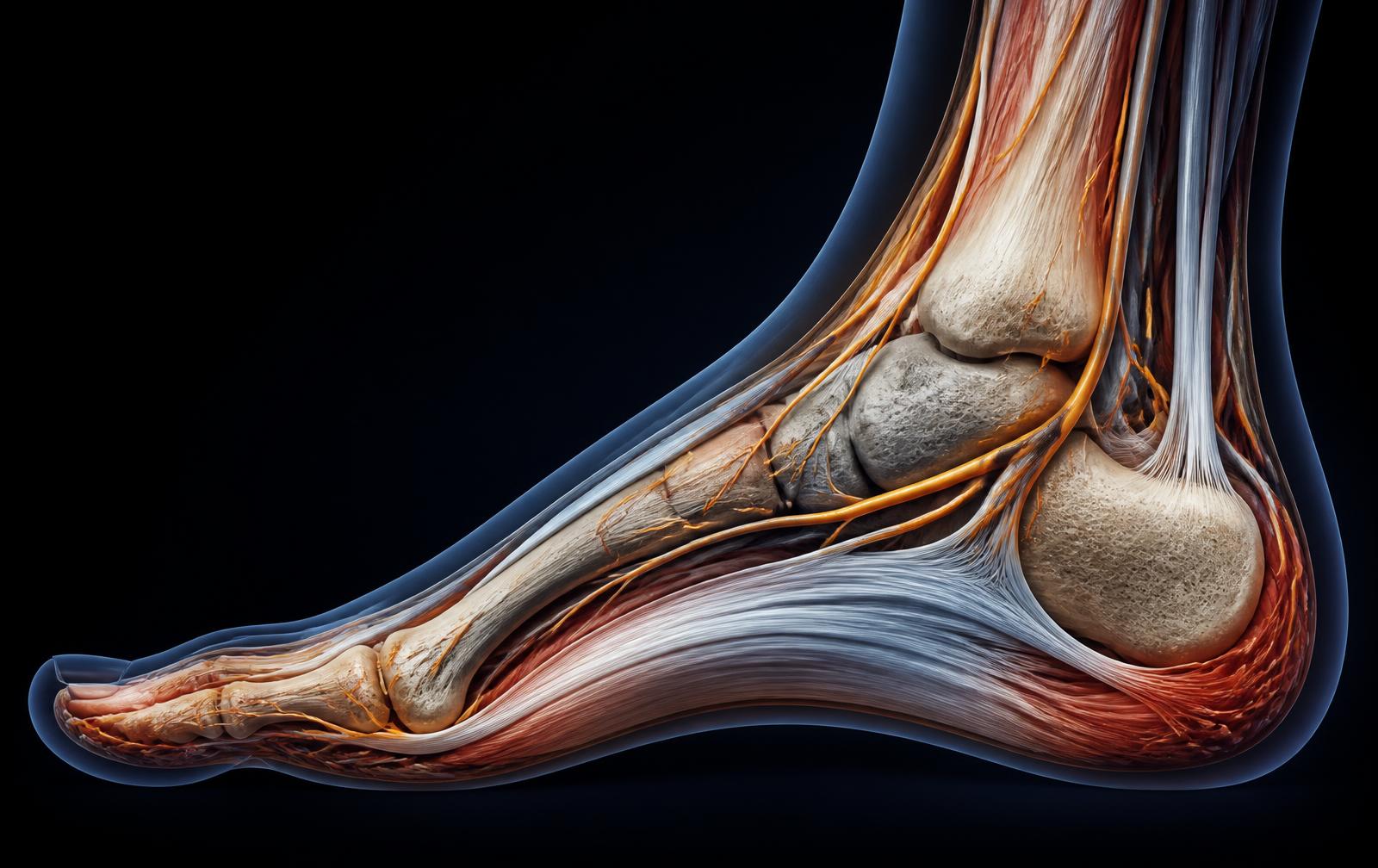
Anatomy
Foot Symptoms With a Non-Foot Source
When symptoms are burning, numb, or follow a nerve distribution, the evaluation widens to include the leg and lower back. Foot symptoms in both feet also raise different considerations than symptoms in one foot.
Possible Contributors
Common contributors and possible causes
The possibilities below are considered together with the examination. A symptom pattern on its own does not confirm plantar fascia problems, neuropathy, or nerve entrapment.
- 01
Plantar fascia-related pain
Pain along the sole or heel, often related to load and first steps.
- 02
Tendon irritation
Tendons around the ankle and foot can become painful with overload.
- 03
Arthritis or joint pain
Joint-surface changes in the foot or ankle can produce stiffness and aching.
- 04
Nerve irritation or entrapment
A nerve compressed along its course can create burning or tingling.
- 05
Peripheral neuropathy
Nerve function changes can cause numbness, burning, or altered sensation, often in both feet.
- 06
Stress or overuse injury
Bone or soft-tissue overload can follow a change in activity.
- 07
Heel pain
Several structures converge at the heel, and the pattern helps separate them.
- 08
Pain referred from the lower back
Lumbar nerve irritation can produce foot symptoms with little back pain.
Physician-Led Evaluation
How Foot Pain Is Evaluated
Your physician considers where the symptoms sit, how they behave with load, what the examination reproduces, and whether nerve or spine findings are present.
- Exact location: heel, arch, ball, top, or side.
- Character of the symptoms: aching, sharp, burning, or numb.
- Response to first steps, standing, and activity.
- Footwear, activity change, and prior injuries.
- Sensation, strength, and balance testing.
- Back and leg findings when symptoms suggest a nerve source.
- Imaging or other testing when it would change the plan.
Care Options
Treatment options that may be considered
Treatment depends on the diagnosis, your history, your goals, and the findings from a physician-led evaluation.
Come Prepared
Questions to discuss with a physician
- 01Is the pain on the heel, arch, ball, top, or side of the foot?
- 02Is it burning, numb, electric, aching, or sharp?
- 03Is it worse with the first steps or after activity?
- 04Are there back, leg, or balance symptoms?
- 05Have footwear, activity, or previous injuries changed?
- 06What findings would lead to imaging or other testing?
Questions Patients Ask
Frequently asked questions
Is heel pain always plantar fasciitis?
No. Several structures can produce heel pain, and a diagnosis is based on examination as well as the symptom pattern.
Why do my feet burn at night?
Burning symptoms can relate to nerve function, but there are multiple possible explanations. This is a question worth raising directly at an evaluation.
Can back problems cause foot symptoms?
Yes. Lumbar nerve irritation can produce foot pain, numbness, or tingling, sometimes without much back pain.
Do orthotics or different shoes help?
Footwear and load management are frequently part of the discussion, but what helps depends on the underlying problem.
When is imaging needed?
When it would answer a specific question raised by the history and examination — for example after a suspected stress injury.
This page is for general education only. It does not diagnose your condition or replace an evaluation by a qualified clinician.
Related PainHealth Resources
Continue Learning
Stop any activity that worsens your symptoms and discuss questions with a qualified clinician.
Ready to understand what may be contributing to your pain?
Start a conversation with the PainHealth team about your symptoms, goals, prior treatment, and next steps.