
Condition Guide
Lower Limb Pain
Pain, numbness, heaviness, or weakness in the leg can come from the lower back, nerves, joints, muscles, blood vessels, or more than one source. The pattern of symptoms and how they affect movement can help guide the next step. A physician-led evaluation brings those details together before treatment is discussed.

Some leg symptoms require medical attention beyond a pain evaluation. Sudden swelling, color change, severe calf pain, sudden weakness, or shortness of breath should be assessed urgently.
Not Every Leg Symptom Is a Spine Problem
Leg pain is sometimes assumed to come from the back. It often does — but the hip, knee, peripheral nerves, muscles, and blood vessels can all produce leg symptoms, and more than one may be involved at once.
Overview
What is lower limb pain?
Lower limb pain covers symptoms anywhere from the buttock to the foot: aching, burning, cramping, heaviness, numbness, tingling, or weakness. What matters most is the pattern — where the symptoms start, where they travel, what brings them on, and what relieves them.
Symptom Patterns
What this pain may feel like
- Leg pain from the back or buttock
- Pain that appears to begin higher up and travels down the leg.
- Numbness or tingling
- Altered sensation in part of the leg or foot, sometimes in a band or patch.
- Leg heaviness with standing or walking
- Symptoms that build with upright activity and ease with sitting or bending forward.
- Knee-region pain
- Pain around the knee that may be local or referred from the hip or back.
- Calf or shin discomfort
- Aching or cramping that may relate to muscle, nerve, or circulation.
- Weakness or changes in balance
- Difficulty with stairs, catching a foot, or feeling unsteady.
- Pain after an injury
- Symptoms that began with a specific event or a change in activity.
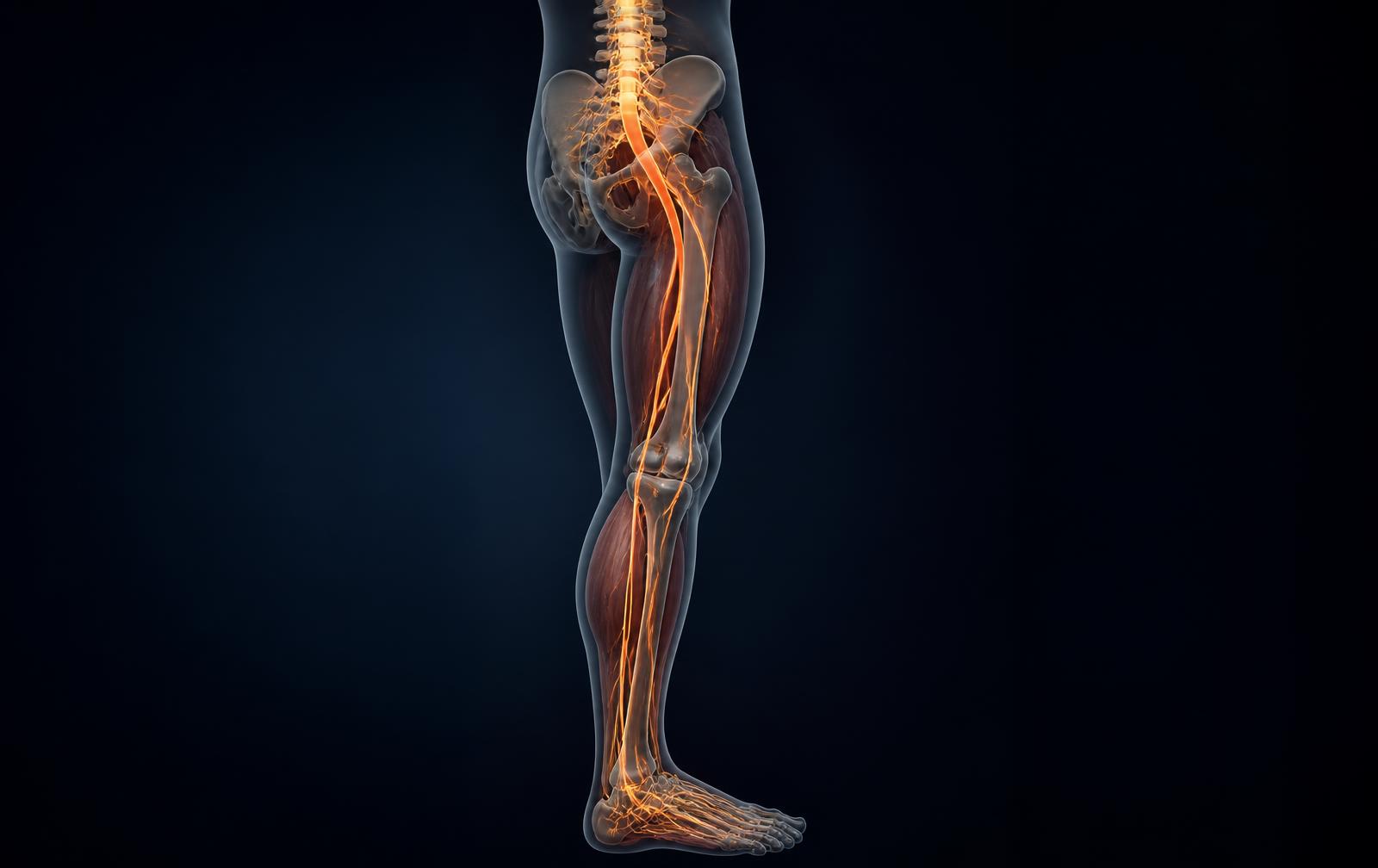
Anatomy
Overlapping Sources
It is common for someone to have both a spine finding and a hip or knee problem. Rather than assuming one explains everything, an evaluation looks at which findings match the symptoms you actually experience during daily activity.
Possible Contributors
Common contributors and possible causes
Leg symptoms can have several possible contributors. The list below describes possibilities considered during an evaluation, not conclusions about your pain.
- 01
Lumbar radiculopathy or sciatica
Irritation of a nerve root can create pain, numbness, or tingling along a nerve pathway.
- 02
Spinal stenosis
Narrowing around the nerves may relate to heaviness or fatigue with standing and walking.
- 03
Hip or knee joint conditions
Joint disease can refer pain into the thigh, knee, or lower leg.
- 04
Muscle or tendon irritation
Overload or altered mechanics can produce localised leg pain.
- 05
Peripheral nerve problems
Nerves can be irritated below the spine, producing more focal symptoms.
- 06
Circulation-related conditions
Vascular problems can cause leg pain and require assessment beyond a pain evaluation.
- 07
Referred pain
Pain felt in the leg may originate in the pelvis, hip, or spine.
Physician-Led Evaluation
How Leg Symptoms Are Evaluated
Your physician looks at where symptoms begin, how far they travel, how they respond to position and walking, and what the neurological examination shows.
- The route the symptoms follow down the leg.
- Whether standing, walking, sitting, or bending changes them.
- Strength, sensation, and reflex testing.
- Hip and knee joint assessment.
- Signs that point toward circulation or another medical cause.
- Imaging or additional testing when it would change the plan.
Care Options
Treatment options that may be considered
Treatment depends on the diagnosis, your history, your goals, and the findings from a physician-led evaluation.
Come Prepared
Questions to discuss with a physician
- 01Does the pain travel from the back or buttock?
- 02Is there numbness, tingling, or weakness?
- 03Does walking or standing bring on heaviness?
- 04Is there swelling, color change, or sudden onset?
- 05What does the examination show?
- 06Could more than one structure be involved?
Questions Patients Ask
Frequently asked questions
Is leg pain always sciatica?
No. Sciatica describes symptoms along a nerve pathway, but leg pain can also come from the hip, knee, muscles, peripheral nerves, or circulation.
Why do my legs feel heavy when I walk?
Heaviness with walking that eases with sitting or leaning forward is one pattern physicians consider carefully. It can relate to the spine or to circulation, and those require different assessments.
Does numbness mean nerve damage?
Not necessarily. Altered sensation has several possible explanations, and its significance depends on the distribution and the examination.
Can I exercise with leg pain?
Often yes, with the right type and amount. Stop any activity that worsens your symptoms and discuss questions with a qualified clinician.
What if imaging of my back looks normal?
Normal imaging does not mean the symptoms are not real. It shifts attention toward other possible contributors.
This page is for general education only. It does not diagnose your condition or replace an evaluation by a qualified clinician.
Related PainHealth Resources
Continue Learning
Stop any activity that worsens your symptoms and discuss questions with a qualified clinician.
Ready to understand what may be contributing to your pain?
Start a conversation with the PainHealth team about your symptoms, goals, prior treatment, and next steps.