
Condition Guide
Headaches and Migraines
Headaches can have many patterns and causes. Migraine, tension-type headache, neck-related pain, nerve irritation, medication effects, and other medical conditions may require different approaches. A physician-led evaluation looks at the pattern, associated symptoms, and history before treatment options are discussed.

Some headaches need urgent medical evaluation. Seek immediate care for a sudden, severe headache; a new headache with weakness, confusion, fainting, vision loss, fever, stiff neck, head injury, or other concerning symptoms.
Headache Patterns Carry Information
How often headaches occur, how long they last, what accompanies them, and what changes them are often more informative than the intensity alone.
Overview
What is headaches and migraines?
Headache is a symptom, not a single diagnosis. Different headache types behave differently: some are episodic with clear triggers and associated symptoms, others are steady and pressure-like, and some relate closely to the neck. Identifying the pattern is the first step toward deciding what care is appropriate.
Patterns Patients Describe
What this pain may feel like
- Migraine-type symptoms
- Episodes that may include throbbing pain, nausea, and sensitivity to light or sound.
- Tension or pressure-type headache
- A steady band-like or pressing discomfort across the head.
- Headache related to the neck
- Pain that starts in the neck or is provoked by neck posture and movement.
- Pain near the back of the head
- Discomfort over the occipital region, sometimes sharp or shooting.
- Light or sound sensitivity
- Discomfort in normal light or noise during an episode.
- Nausea or visual symptoms
- Associated symptoms that may accompany certain headache types.
- Headache with neck movement
- Symptoms that change with turning, extending, or sustaining a neck position.
- Recurrent or persistent headache
- Headaches occurring frequently or present most days.
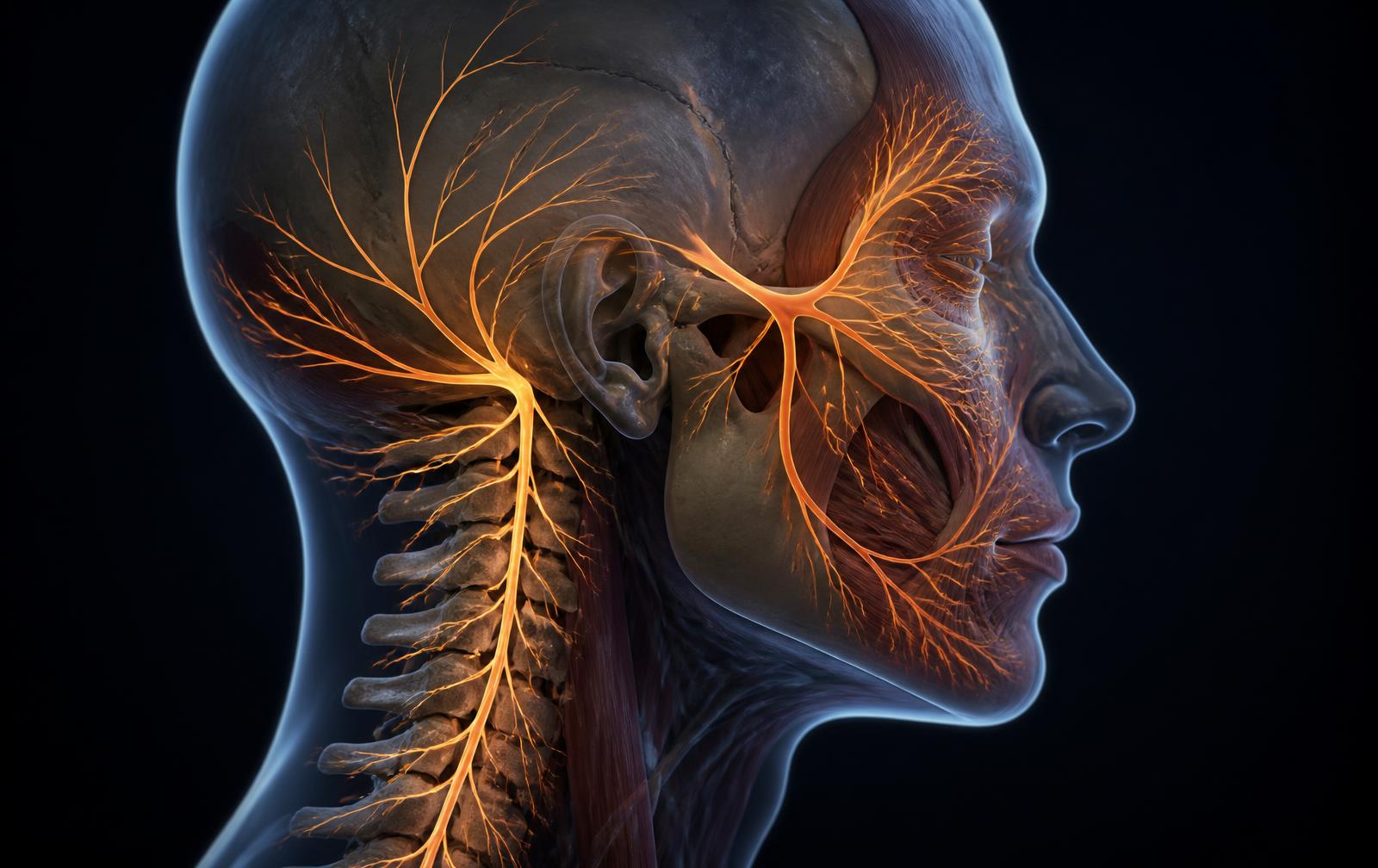
Anatomy
When Headache and Neck Symptoms Overlap
Neck-related and primary headache disorders can coexist. Treating only one may leave symptoms partly unchanged, which is why the evaluation considers both rather than assuming a single explanation.
Possible Contributors
Common contributors and possible causes
More than one factor can contribute at the same time. Not every headache is caused by the neck or the spine.
- 01
Migraine
A distinct headache disorder often with associated sensory symptoms.
- 02
Tension-type headache
Commonly bilateral, pressing, and not typically worsened by routine activity.
- 03
Cervicogenic headache
Headache attributed to a source in the neck, often one-sided.
- 04
Occipital neuralgia
Sharp or shooting pain in the distribution of the occipital nerves.
- 05
Neck-related pain
Cervical joints and muscles can contribute to head and neck symptoms.
- 06
Medication-overuse headache
Frequent use of acute headache medication can itself perpetuate headaches.
- 07
Sleep, stress, or other health factors
General health, sleep quality, and stress can influence headache frequency.
Physician-Led Evaluation
How Headaches Are Evaluated
Your physician considers the headache history in detail, examines the neck and neurological function, and reviews what has already been tried.
- When the headaches began and how they have changed.
- Frequency, duration, and typical course of an episode.
- Associated symptoms such as nausea, visual change, or sensitivity.
- Neck examination and how it affects the symptoms.
- Medication history, including frequency of acute medication use.
- Sleep, stress, and other contributing health factors.
- Imaging or referral when warning features or specific questions are present.
Care Options
Treatment options that may be considered
Treatment depends on the diagnosis, your history, your goals, and the findings from a physician-led evaluation.
Come Prepared
Questions to discuss with a physician
- 01When did the headaches begin?
- 02How often do they occur and how long do they last?
- 03Are there visual symptoms, nausea, light sensitivity, or neck symptoms?
- 04Is the pain sudden or progressively worsening?
- 05What medications or treatments have already been tried?
- 06Are there warning signs that require urgent evaluation?
Questions Patients Ask
Frequently asked questions
How do I know whether I have migraine or tension-type headache?
The pattern, associated symptoms, and how episodes behave over time help distinguish them. This is best worked through with a clinician rather than from a symptom list.
Can neck problems cause headaches?
They can contribute to some headache patterns. However, not every headache is neck-related, and both can be present together.
Can headache medication make headaches worse?
Frequent use of acute headache medication is recognised as a factor that can perpetuate headaches. Do not stop prescribed medication on your own — raise it with your prescribing clinician.
Do I need a scan for headaches?
Most headaches do not require imaging. It becomes relevant when there are warning features or a specific clinical question.
What should I track before my appointment?
Frequency, duration, triggers, associated symptoms, and what you have taken are all useful. The Pain Profiler can help organise this.
This page is for general education only. It does not diagnose your condition or replace an evaluation by a qualified clinician.
Related PainHealth Resources
Continue Learning
Stop any activity that worsens your symptoms and discuss questions with a qualified clinician.
Ready to understand what may be contributing to your pain?
Start a conversation with the PainHealth team about your symptoms, goals, prior treatment, and next steps.