
Condition Guide
Hip Pain
Hip pain may come from the hip joint, muscles, tendons, bursae, pelvis, lower back, or nearby nerves. Understanding exactly where the pain begins and how it behaves helps guide the evaluation. A physician-led assessment connects your symptoms, examination findings, and history before treatment options are discussed.

Where Does Hip Pain Begin?
Pain in the front of the hip, the outer side, the buttock, or down the thigh can point in different directions. These patterns can overlap. A location alone does not establish a diagnosis.
Overview
What is hip pain?
Hip pain is a description of location, not a diagnosis. The hip is a deep joint surrounded by strong muscles and tendons, and it sits next to the pelvis, sacroiliac joints, and lumbar spine. Because these structures share nerve supply and mechanical load, symptoms felt around the hip may originate in the joint itself or in something nearby.
Where the Pain Is Felt
What this pain may feel like
- Front of the hip or groin
- Often described as deep, catching, or worse with sitting, pivoting, or getting out of a car.
- Outer side of the hip
- Tenderness over the side of the hip, sometimes worse lying on that side.
- Buttock or back of the hip
- Deep aching that may be confused with lower-back or sacroiliac-region pain.
- Pain travelling into the thigh or leg
- Symptoms that spread below the hip and may involve nerve irritation.
- Pain that may be referred from the lower back
- Hip-area symptoms that change with back position or activity.
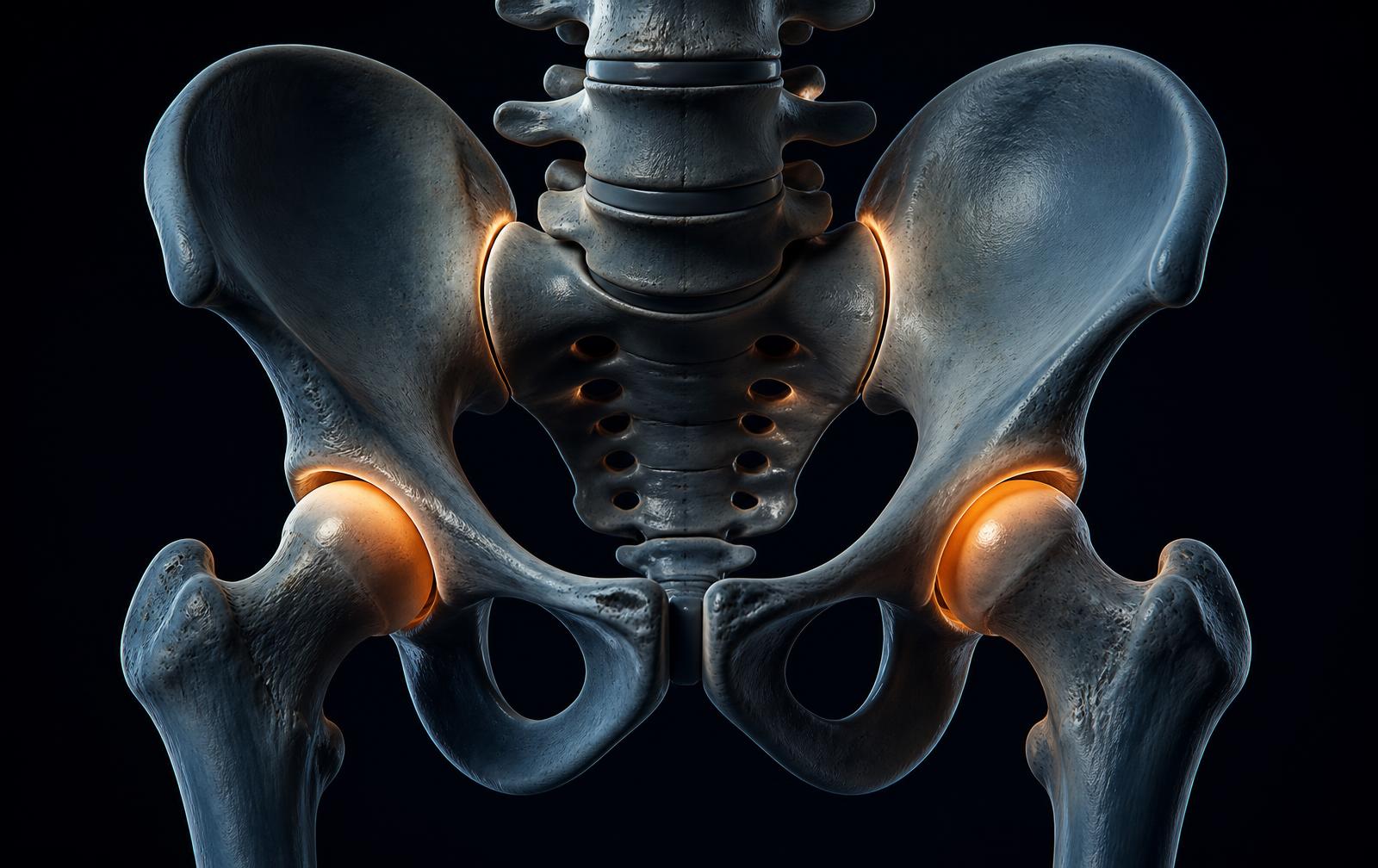
Anatomy
When the Hip Is Not the Source
Buttock and outer-hip symptoms frequently come from the lumbar spine or sacroiliac region rather than the hip joint. Equally, hip joint disease can present as groin, thigh, or even knee pain. Examination manoeuvres that load specific structures — and how you respond to them — often add more information than imaging alone.
Possible Contributors
Common contributors and possible causes
Possible contributors are considered together rather than in isolation. These patterns can overlap. A location alone does not establish a diagnosis.
- 01
Hip arthritis
Joint-surface changes can produce groin pain and stiffness, often with reduced rotation.
- 02
Tendon or muscle irritation
Tendons around the hip can become painful with load, activity change, or weakness.
- 03
Bursitis-type pain
Pain and tenderness over the outer hip that may worsen with pressure.
- 04
Labral or joint-related problems
Deep, catching, or pinching sensations sometimes relate to structures inside the joint.
- 05
Sacroiliac-region pain
Pain around the pelvis and buttock that may resemble hip or back pain.
- 06
Referred lumbar spine pain
Lower-back conditions can create hip-area symptoms without hip joint disease.
- 07
Nerve-related symptoms
Nerve irritation can create burning, tingling, or radiating symptoms around the hip and thigh.
Physician-Led Evaluation
How Hip Pain Is Evaluated
Your physician looks at how you move, where the pain is reproduced, and whether the lower back or nerves may be contributing. The goal is to narrow the possibilities before treatment is discussed.
- Walking and movement patterns.
- Range of motion in the hip and pelvis.
- Strength testing around the hip and core.
- Where tenderness is reproduced on examination.
- The exact location and behaviour of the pain.
- Lower-back and nerve findings.
- Imaging when it would change the plan.
Care Options
Treatment options that may be considered
Treatment depends on the diagnosis, your history, your goals, and the findings from a physician-led evaluation.
Come Prepared
Questions to discuss with a physician
- 01Is the pain in the groin, outer hip, buttock, or leg?
- 02Is it worse with walking, stairs, sitting, or lying on that side?
- 03Could the lower back or nerves be contributing?
- 04What does the examination suggest?
- 05Would imaging change the treatment plan?
- 06Which options are appropriate before an invasive procedure?
Questions Patients Ask
Frequently asked questions
Why does my hip pain feel like it is in my groin?
Groin pain is a common way hip joint problems present. It is one pattern among several and is interpreted alongside examination findings.
Can back problems cause hip pain?
Yes. Lumbar spine and sacroiliac conditions can produce buttock, outer-hip, and thigh symptoms that feel like hip pain.
Do I need an X-ray or MRI?
Imaging is useful when it answers a specific question raised by your history and examination. It is not automatically required.
Will an injection tell us where the pain is coming from?
A targeted injection can sometimes provide diagnostic information as well as relief, but its role depends on the clinical picture.
Should I keep exercising?
Movement is generally valuable, but the right type and amount vary. Stop any activity that worsens your symptoms and discuss questions with a qualified clinician.
This page is for general education only. It does not diagnose your condition or replace an evaluation by a qualified clinician.
Related PainHealth Resources
Continue Learning
Stop any activity that worsens your symptoms and discuss questions with a qualified clinician.
Ready to understand what may be contributing to your pain?
Start a conversation with the PainHealth team about your symptoms, goals, prior treatment, and next steps.